NICJR’s Gun Violence Reduction Strategy

Gun Violence Reduction Strategy

Gun Violence Reduction Strategy

The Gun Violence Reduction Strategy (GVRS) is a comprehensive method of identifying the individuals in a jurisdiction who are at the very highest risk of being involved in gun violence and effectively intervening with those individuals and their conflicts to significantly reduce gun violence.

NICJR works with jurisdictions to implement GVRS through data analysis, policy development, training, coaching, and technical assistance. NICJR helps identify people and groups at highest risk of being involved in gun violence in a specific jurisdiction; trains community leaders and law enforcement to effectively communicate that risk to those individuals in a supportive manner; coaches and trains jurisdictions to stand up and manage intensive community violence intervention (CVI) efforts to work with those individuals; and supports law enforcement in reducing its overall footprint in the community while strengthening its focus on the small number of people involved in gun violence. When operated to scale, well managed, and coordinated, GVRS can significantly and consistently reduce gun violence jurisdiction-wide.

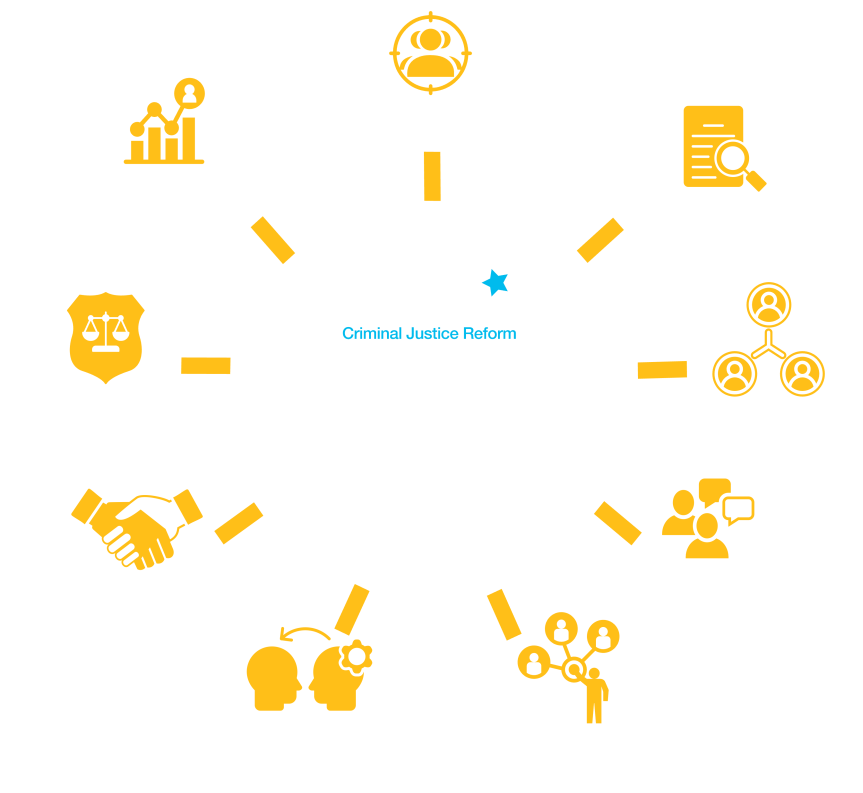
Gun Violence Reduction Strategy cycle

GVRS consists of five core components:

q

1. Data-Driven Identification

Data-driven identification of groups and individuals at very highest risk of being involved in gun violence occurs through an initial Gun Violence Problem Analysis and weekly Shooting Review meetings. Weekly Coordination Meetings inform the development of outreach and engagement plans for highest-risk individuals identified through Shooting Reviews and CVI worker Conflict Mapping.


2. Direct & Respectful Communication

Once very high-risk individuals are identified, they should be informed of their risk and offered support. This occurs either through a group meeting of very high-risk individuals with community leaders, service providers, law enforcement, and other community stakeholders (known as a Community Safety Meeting) or through individual direct contact of a high-ranking police officer and community leader with a very high-risk individual (known as a Custom Notification).

3. Provision of Services, Supports, & Opportunities

Once very high-risk individuals have been identified and informed of their risk, they are offered intensive services, supports, and opportunities—with an initial primary focus on establishing a trusting and positive trust with a Life Coach. For more information, check out our Intensive Life Coaching Report.

4. Focused Enforcement

For those individuals who continue to engage in violence, there is follow-up supervision and focused enforcement by police, probation, parole, and prosecutors. These enforcement options are clearly communicated to very high-risk individuals up front and are only instituted once violence occurs. Focusing enforcement on violence produces an overall smaller footprint of law enforcement on the community. 


5. Data-Driven Performance Management & Accountability

All of these components are sustained and strengthened through data-driven performance management and accountability, which includes defining and monitoring a set of goals and metrics the strategy will achieve and continually improving programming based on this monitoring.

Learn more about NICJR’s GVRS work in cities around the country.

Oakland, CA

Indianapolis, IN

Knoxville, TN