


The National Institute for Criminal Justice Reform provides training and technical assistance (TTA) to governments and community-based organizations working to reduce gun violence in communities across the country. Our work emphasizes the strategic coordination of violence reduction efforts across city, county, and/or state leadership; offices of violence prevention and similar agencies; law enforcement; health systems; and community-based organizations and stakeholders.
Gun Violence Reduction Strategy (GVRS)
The Gun Violence Reduction Strategy (GVRS) is a comprehensive method of identifying the individuals in a jurisdiction who are at the very highest risk of being involved in gun violence and employing effective interventions to intervene with those individuals and their conflicts to significantly reduce gun violence.
We work with cities to implement GVRS through data analysis, policy development, training, coaching, and technical assistance. NICJR’s process helps identify people and groups at highest risk of being involved in gun violence in a specific city; trains community leaders and law enforcement how to effectively communicate that risk to those individuals in a supportive manner; helps train, stand up, and manage intensive community violence intervention (CVI) efforts to work with those individuals; and works with law enforcement to focus their efforts in a way that reduces the overall footprint of law enforcement on the community while having greater focus on the small number of people involved in gun violence. When operated to scale, well managed and coordinated, GVRS can significantly and consistently reduce gun violence citywide.
National Offices of Violence Prevention Network (NOVPN)
The National Offices of Violence Prevention Network (NOVPN) strives to increase the expertise and effectiveness of local and state offices of violence prevention and other similar agencies by growing a national learning community that employs innovative and evidence-informed strategies to reduce violence in geographically and culturally relevant ways. Since its founding, the Network has grown from 21 agencies to over 80 members, including multiple state-level and county-level offices of violence prevention as well as local OVPs launched with NOVPN support.
Community Violence Intervention
Community violence intervention (CVI) is an emerging public safety approach that uses evidence-informed strategies to reduce near-term violence through tailored community-centered initiatives. As subject matter experts, NICJR supports jurisdictions with understanding, coordinating, and scaling local community violence intervention ecosystems.
Explore our Initiatives
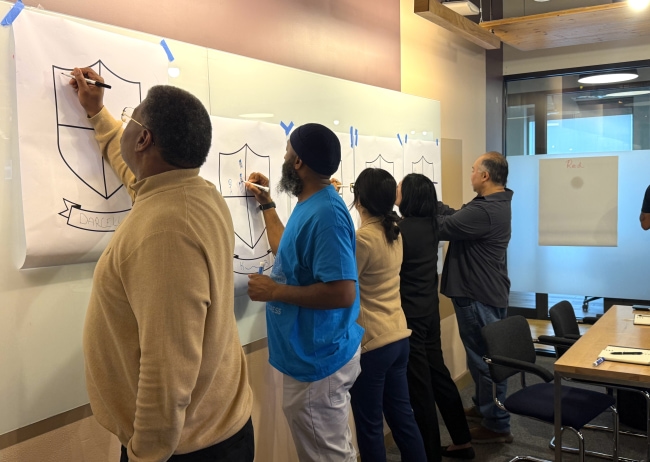
Violence Reduction Management Institute
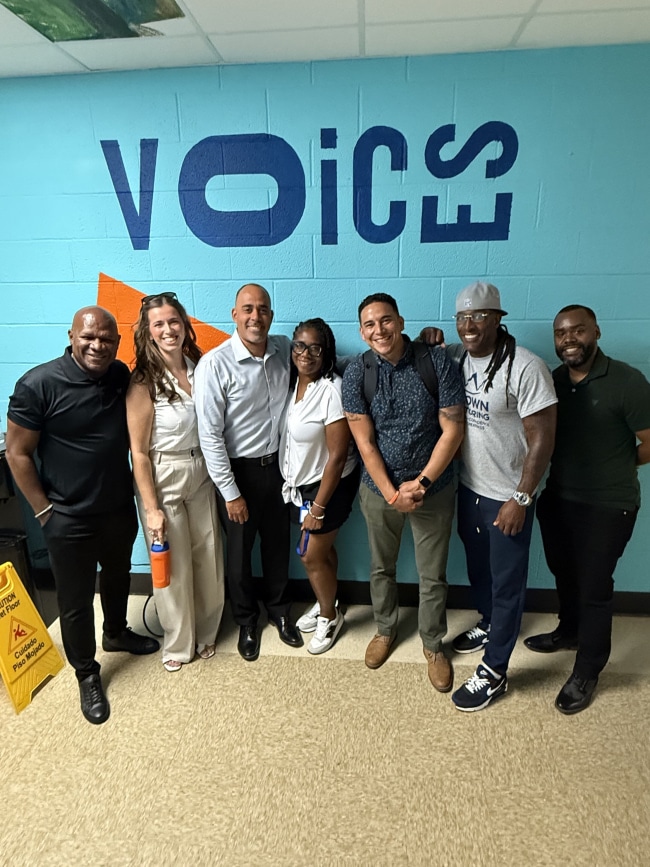
Youth Violence Intervention
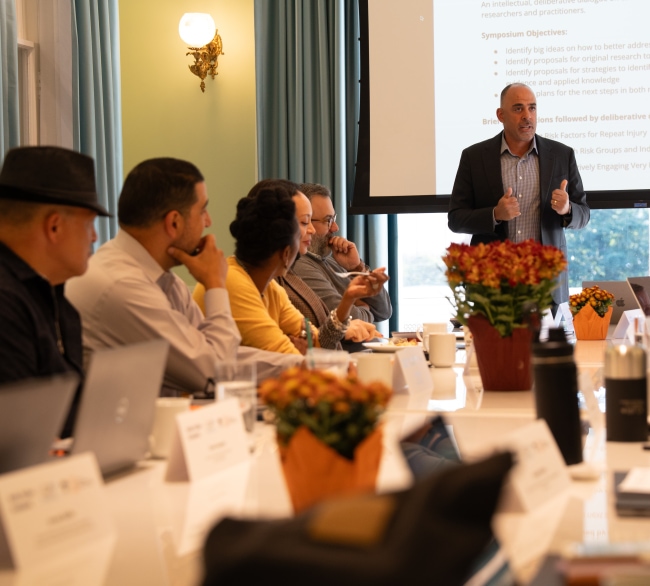
Violence Reduction Research & Practice Network
Explore our City Spotlights

Oakland, CA

Indianapolis, IN

Knoxville, TN

Baltimore, MD
Violence Reduction Continuum
At NICJR, we understand that building safer communities requires jurisdictions to 1) address violence in the near term through gun violence reduction strategies and violence intervention initiatives, 2) prevent violence upstream through longer-term investments such as youth mentoring and after school programs, and 3) transform communities so they no longer induce violence by tackling the root causes of poverty, systemic oppression, and inequality.
The majority of NICJR’s violence reduction work focuses on supporting jurisdictions reduce violence in the near term through the implementation of our gun violence reduction strategy model and the coordination of community violence intervention ecosystems.
Prevention

Violence reduction timeframe:
5–10 years
Long-term violence reduction strategies like mentoring high-risk middle and high school students or youth development workshops.
Intervention

Violence reduction timeframe:
1-3 years
Violence reduction in the near term, like harm reduction strategies and gun violence reduction strategies such as intensive life
coaching and street outreach.
Community Transformation

Violence reduction timeframe:
15-20 years
Transforming communities so that they do not induce violence:
- Economic development
- Neighborhood revitalization
- Education reform and investment


