
Investing in Atlanta's CVI Ecosystem
Learn More about Investing in Atlanta's CVI Ecosystem



With generous support from the Public Welfare Foundation, NICJR has provided technical assistance, training, research, data analysis, and programmatic support to reduce violence in the states of Georgia, Maryland, Michigan, Tennessee, Wisconsin, and Washington, DC.
The following is a brief summary of the work conducted in each jurisdiction and the many reports produced, sub-grants awarded to local CBOs, and media coverage of the work:
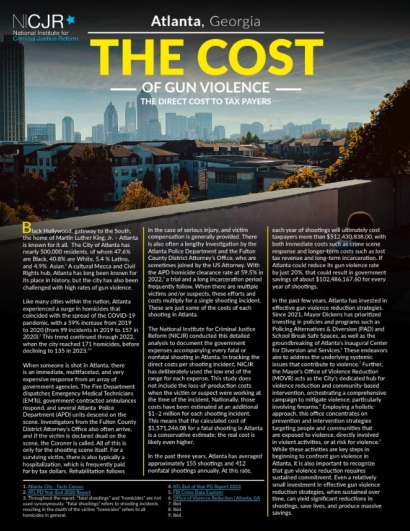
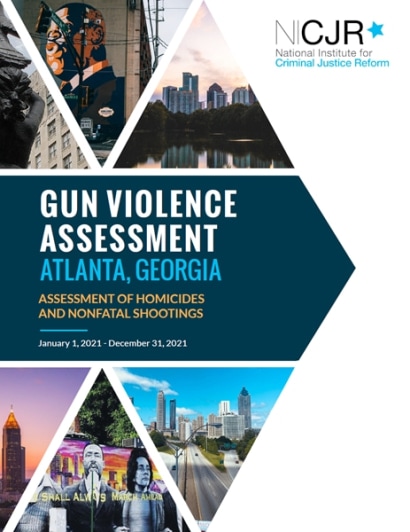
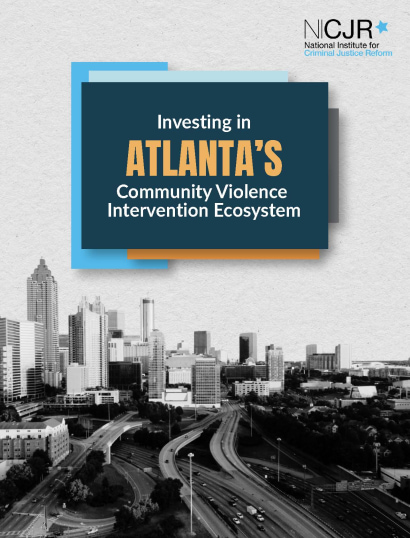
NICJR conducted a Gun Violence Assessment and a Cost of Gun Violence report in Atlanta to support violence reduction work and advocacy for greater investment in community violence intervention (CVI). In conjunction with these research efforts, NICJR helped to launch the City’s Office of Violence Reduction (OVR) and provided coaching, capacity building support, and technical assistance (TA) when it was initially formed.
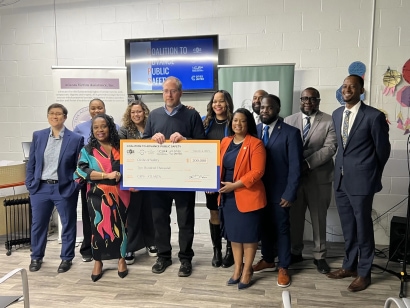
NICJR also provided grant funding and a series of trainings on life coaching and violence intervention to a group of community-based organizations (CBOs) identified by OVR. Atlanta was also chosen for inclusion in the second cohort of jurisdictions receiving support through the Coalition to Advance Public Safety (CAPS). Through this collaborative effort, NICJR worked with Cities United to establish a monthly Atlanta Monthly CVI Ecosystem Convening that gathers violence reduction-focused CBOs to review recent shooting data, share presentations on their work, and identify opportunities for partnership.
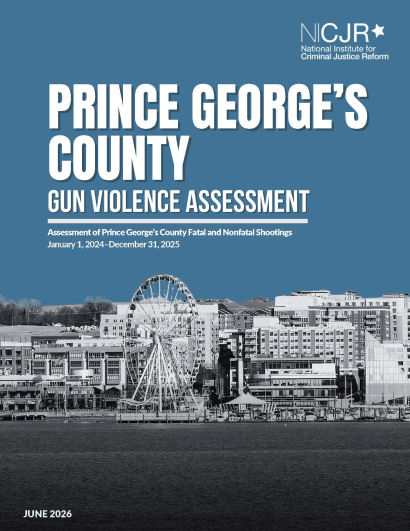
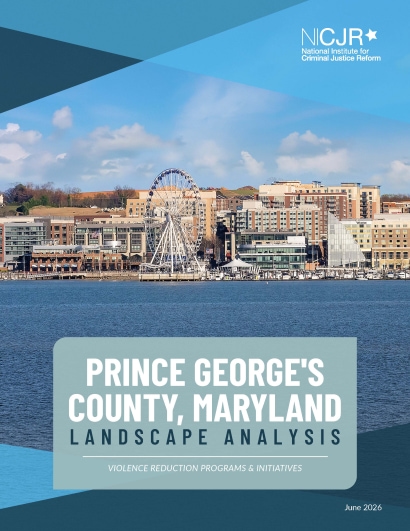
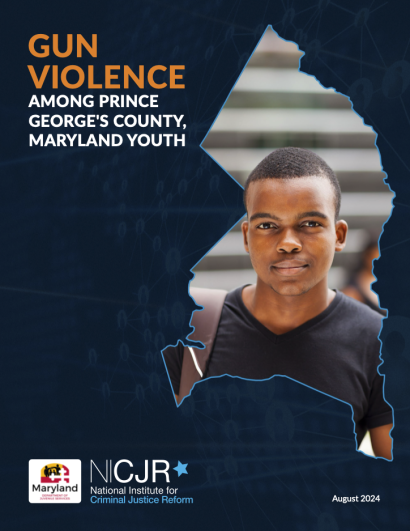
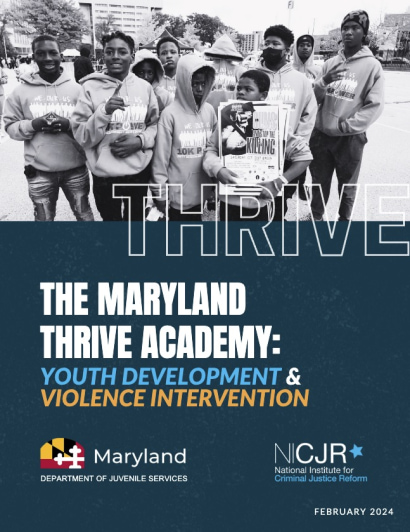
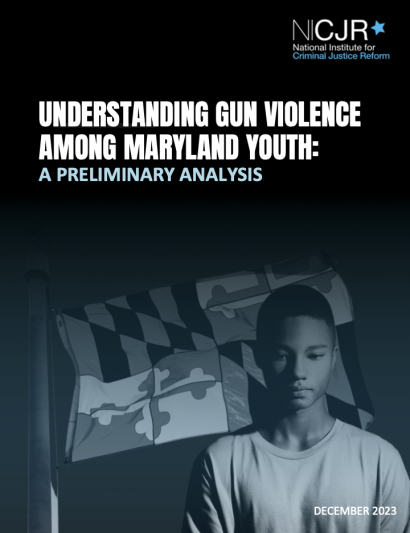
NICJR has supported both statewide and local violence reduction efforts in Maryland. In Baltimore, this has included providing training and technical assistance to City agencies and CBOs on the frontlines of violence intervention. Learn more about NICJR’s work in Baltimore and resulting outcomes here. In Prince George’s County, we are developing two reports that will inform the design and implementation of a gun violence reduction strategy: a Gun Violence Assessment and a Violence Reduction Landscape Analysis. Once these reports are completed, NICJR will partner with the County to disseminate both through a series of in-person community presentations. Intersecting with these efforts, NICJR partnered with the Maryland Department of Juvenile Services (DJS) to conduct an assessment of high-risk youth known to DJS and, based on that assessment, develop the Thrive Academy. This data-informed youth development and violence intervention program provides intensive community-based services to youth under DJS supervision who are at very high risk of being involved in gun violence. With technical assistance from NICJR, the Thrive Academy is operating in Baltimore City, Baltimore County, Prince George’s County, and Anne Arundel County.
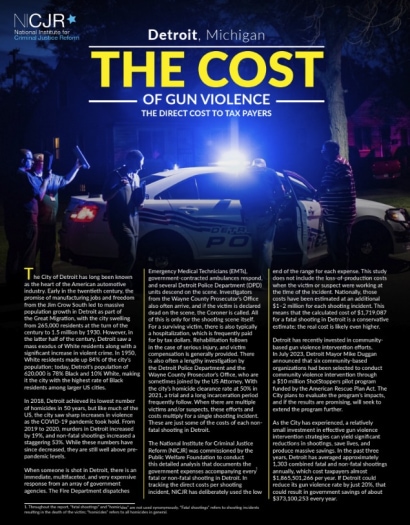
NICJR has supported the violence reduction efforts of both the City of Detroit and the State of Michigan. In Detroit, we developed a Gun Violence Assessment and a Cost of Gun Violence report and Landscape Analysis. NICJR also held a series of meetings with the Mayor’s Office, Chief of Police, and CBOs to gain a better understanding of the city’s needs and developed a recommendations report based on these sessions. Additionally, we provided TA to the Mayor’s Office as it considered establishing an office of violence prevention (OVP). In February 2026, the Mayor signed an Executive Order creating the Office of Neighborhood and Community Safety. That office is now a member of the National Offices of Violence Prevention Network, which sits within NICJR.
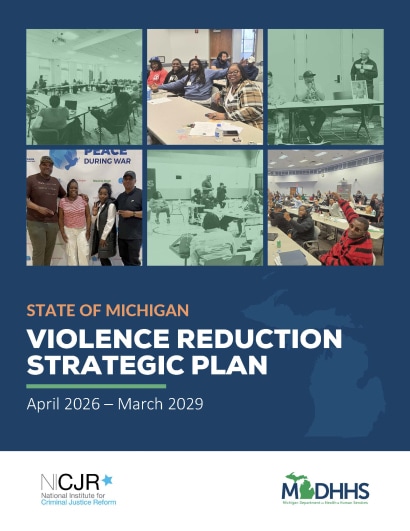
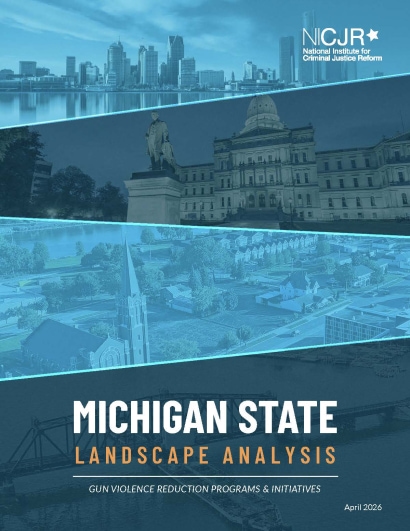
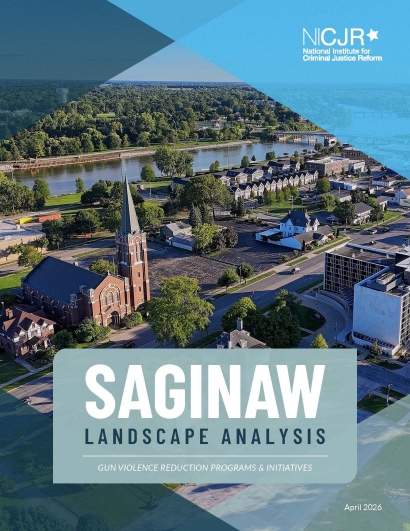
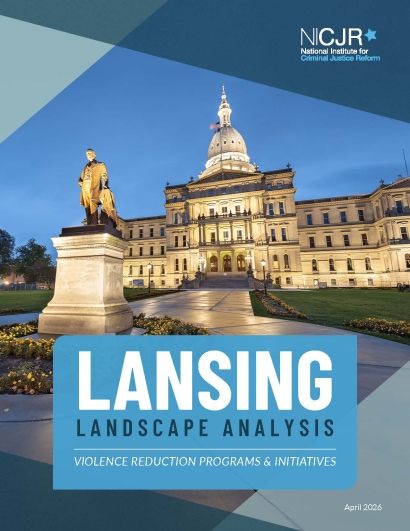
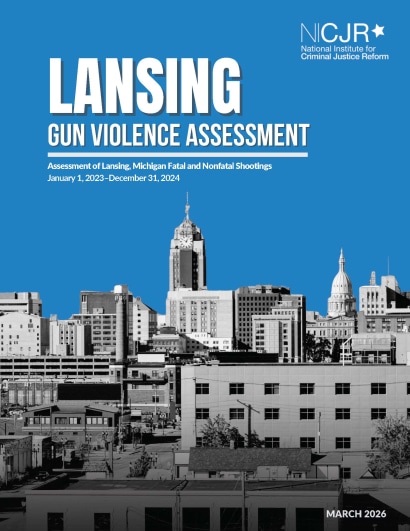
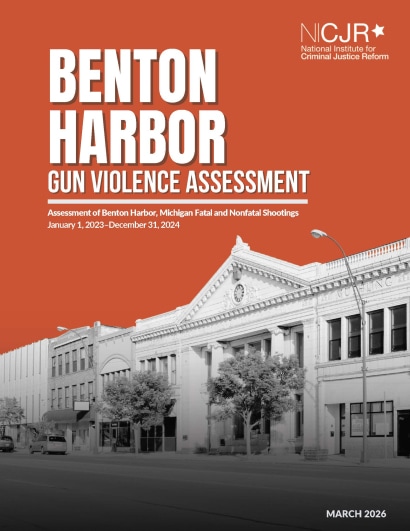
Alongside this local work, NICJR has supported the State of Michigan in establishing an Office of Community Violence Intervention Services and developing a Michigan Violence Reduction Strategic Plan. To inform this work, NICJR also developed a set of Gun Violence Assessments and Violence Reduction Landscape Analyses for four Michigan jurisdictions with high rates of violence: Benton Harbor and Benton Charter Township, Detroit, Lansing, and Saginaw.
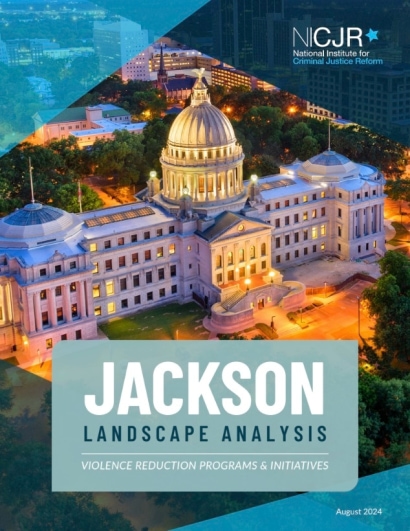
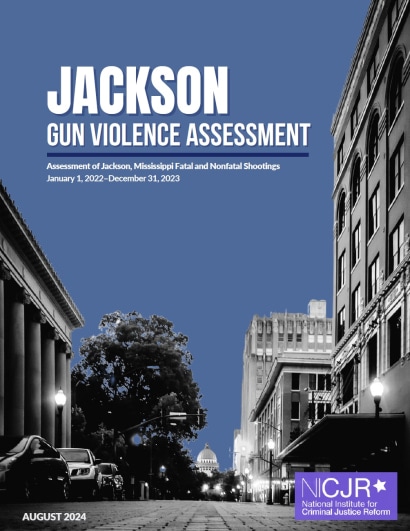
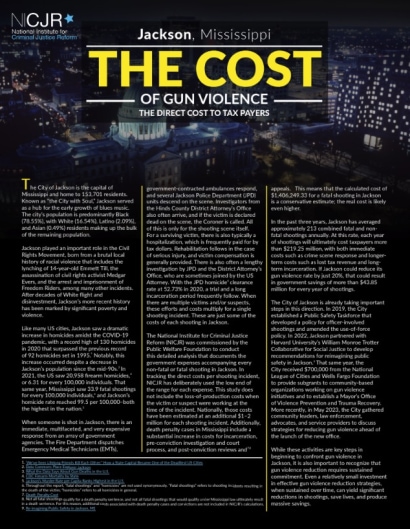
In Jackson, Mississippi, NICJR has provided research, technical assistance, and funding to support violence reduction work and advocacy for greater investment in community violence intervention. NICJR conducted a Gun Violence Assessment, a Landscape Analysis, and a Cost of Gun Violence report for the city. We also provided coaching to the Director of the City’s new Office of Violence Prevention and Trauma Recovery. Due to NICJR’s work in Jackson, the city was selected to receive funds through the federal Community Violence Intervention and Prevention Initiative (CVIPI). NICJR provided significant funding ($250,000) along with training, TA, and other capacity building support to Operation Good, one of the only CBOs in Jackson that specifically focuses on gun violence intervention with the city’s highest-risk individuals. Even though the federal government terminated the CVIPI grant program, NICJR was able to provide the full quarter million dollars in funding to Operation Good.
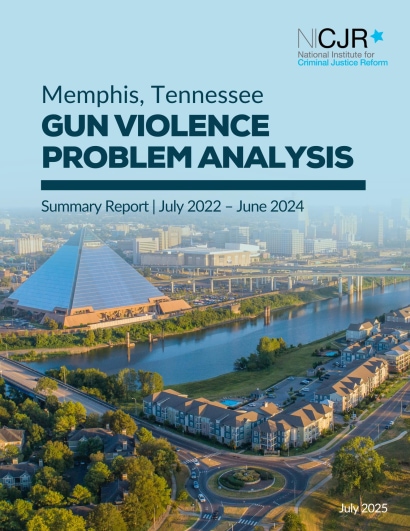
NICJR has been deeply involved in local violence reduction efforts in both East and West Tennessee. In Memphis, NICJR has conducted research, training, and technical assistance to support City stakeholders in planning for and implementing the Gun Violence Reduction Strategy (GVRS). NICJR has also provided training and support to the local nonprofit Youth Villages, helping it to create Memphis Allies, which has become a leading CVI organization in the city.
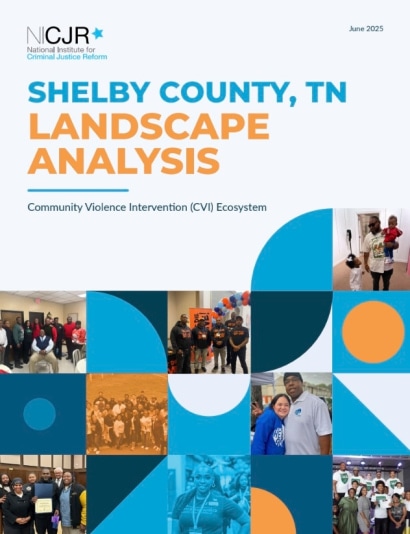
NICJR has also supported Shelby County and the City of Memphis in establishing and strengthening a Joint Office of Neighborhood Safety and Engagement (JONSE). Beyond this, NICJR has worked with the Shelby County Juvenile Court to support operational improvements and reform efforts.
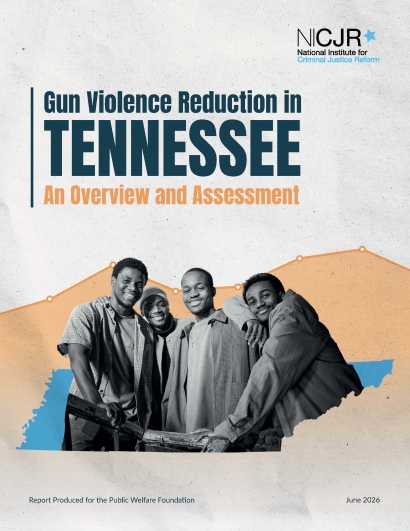
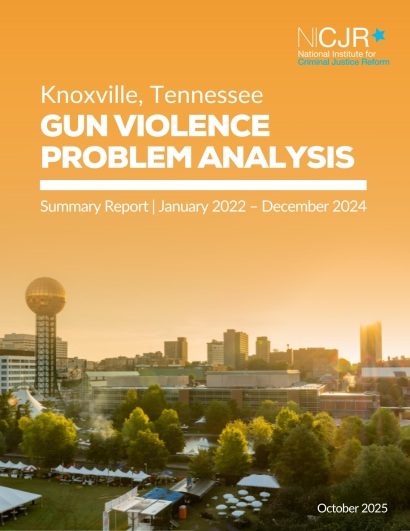
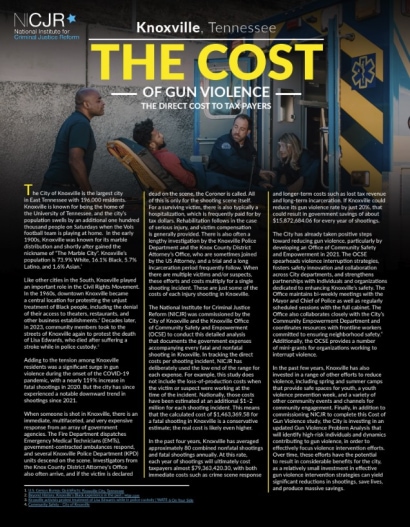
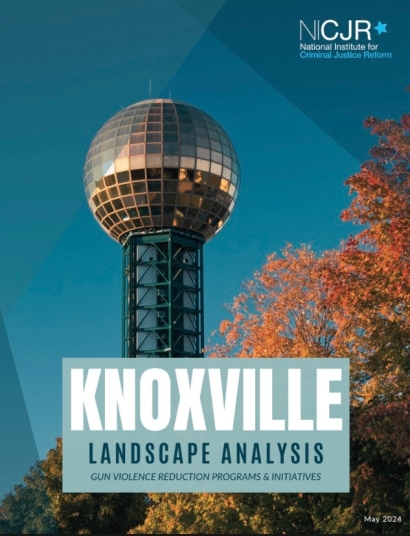
In East Tennessee, NICJR has provided research, coaching, and training to the City of Knoxville as it develops, implements, and refines a comprehensive GVRS. We also worked closely with the City and community to develop the Knoxville Peace CVI initiative, which NICJR now operates and will ultimately transition to a local provider. Learn more about our work in Knoxville and the city’s violence reduction outcomes here. Building upon this work, NICJR is currently finalizing a report that provides an overview of gun violence trends across Tennessee over the last five years, highlights local violence reduction efforts, and offers recommendations for advancing public safety across the state.
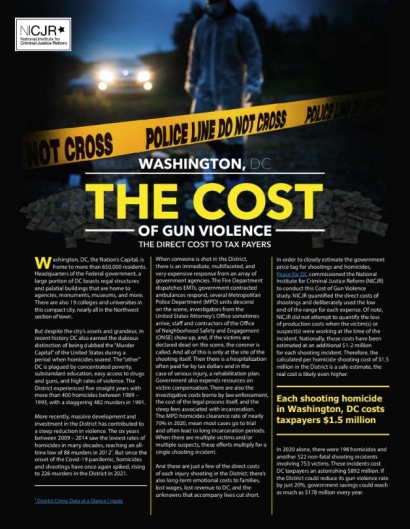
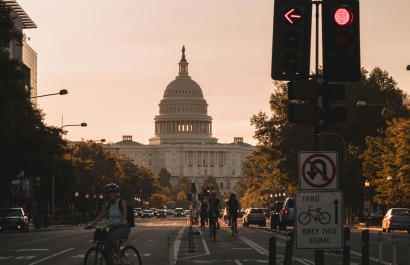
With the support of the Public Welfare Foundation, NICJR began supporting violence reduction efforts in Washington, DC, in 2020. NICJR published a Landscape Analysis of violence reduction efforts in the District. In response, the Mayor announced a new People of Promise initiative to focus intensive intervention efforts on the people at highest risk of being involved in gun violence. In 2022, NICJR developed a detailed Gun Violence Reduction Strategic Plan released by the DC Criminal Justice Coordinating Council (CJCC), and the Mayor’s Office pledged to implement the plan with NICJR’s support. That same year, NICJR partnered with a violence reduction advocacy group, Peace for DC, to conduct a study calculating the direct costs of gun violence to DC taxpayers. Finally, in partnership with the DC CJCC, NICJR developed a detailed Gun Violence Problem Analysis that was released in January 2024.
NICJR has provided funding to eight local community-based organizations in the District. In addition to pass through funding from PWF, due to our work in the District, NICJR selected a local CBO as one of our national Community Violence Intervention and Prevention Initiative grantees. NICJR provided $250,000 along with training, TA, and other capacity building support to the InnerCity Collaborative Community Development Corporation, which operates CVI programs in 10 high-risk neighborhoods in Washington, DC.
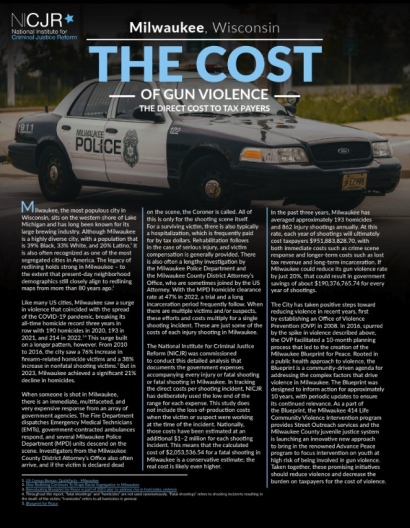
NICJR conducted a Gun Violence Assessment, Landscape Analysis, and Cost of Gun Violence study to support violence reduction work and advocacy for greater investment in community violence intervention in the City of Milwaukee. Through the Coalition to Advance Public Safety, NICJR provided $500,000 in grants to five local CBOs who also received training and capacity building support from NICJR partners. Additionally, NICJR provided coaching and technical assistance to the City’s Office of Violence Prevention as it recruited a new Director. NICJR continues to provide support to the development of a Milwaukee Violence Reduction Strategic Plan.
.png?resize=0x160)
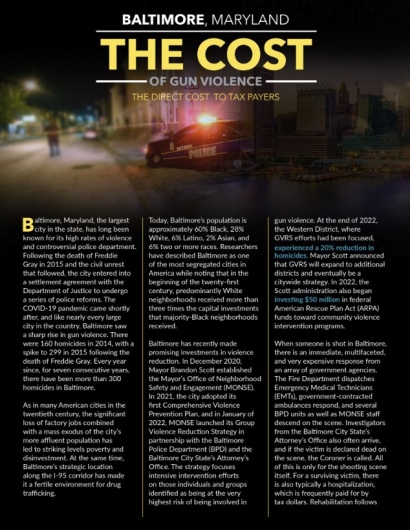
This analysis breaks down the specific governmental costs associated with each fatal and nonfatal shooting in a jurisdiction, including crime scene response, hospital and rehabilitation, criminal justice, incarceration, victim support, and lost tax revenue. NICJR has conducted a series of these studies in jurisdictions across the US, releasing findings in powerful, detailed infographic reports designed to inform policy and bolster support for GVRS efforts.

This assessment offers a high-level overview of a jurisdiction’s gun violence problem through analysis of publicly available data on the jurisdiction’s fatal and nonfatal shootings in the past 12–24 months, equipping the site to strategically focus interventions.

This report uses detailed data provided by a jurisdiction to examine fatal and nonfatal shootings in the past 12–24 months. This analysis identifies the specific nature of gun violence in the jurisdiction and the unique characteristics of groups and individuals at highest risk of being involved in gun violence, equipping the site to strategically focus interventions.

This analysis provides a comprehensive portrait of a jurisdiction’s existing violence reduction ecosystem. Organized around the categories of violence prevention, violence intervention, and community transformation, this report examines both government and community-based resources to identify service gaps and opportunities for increased coordination and collaboration.